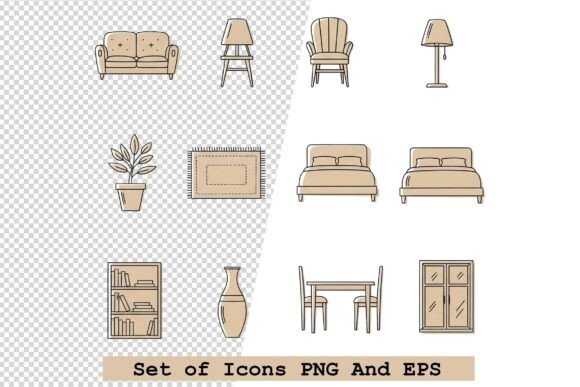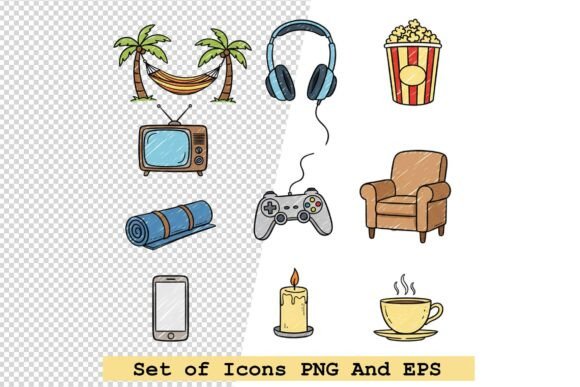
Building Visual Language with a Set of Leisure Icons Vector Illustration
In the realm of digital and print design, maintaining a cohesive visual identity is paramount. A set of leisure icons vector illustration offers a systematic approach to incorporating symbols that represent activities, hobbies, and lifestyle choices. These icons are designed with a clean, minimal aesthetic, making them versatile tools for a wide range of projects. Whether you are developing a mobile app for outdoor enthusiasts or creating a brochure for a recreational facility, such icon sets provide the building blocks for effective communication. The precision of the vector format ensures that each element maintains clarity, no matter where it appears.
The modern design landscape demands consistency across every touchpoint. A set of leisure icons vector illustration delivers this by using balanced line weights and uniform proportions. This creates a unified family of symbols that can be mixed and matched without visual discord. For example, icons for camping, cycling, and reading within the same set will share a common stroke thickness and stylistic approach, reinforcing a coherent visual system. This consistency is not merely aesthetic; it improves usability by helping users quickly recognize the meaning of each symbol.
Understanding the Design Principles Behind Modern Icon Sets
Contemporary icon sets prioritize clarity and visual harmony. Each icon in a set of leisure icons vector illustration is crafted with precision, ensuring that line weights are balanced and proportions are consistent. This attention to detail allows the icons to function as a unified collection rather than a disjointed assortment. The clean style reduces visual noise, making the icons adaptable to both subtle and prominent placements. For example, a hiking boot icon and a picnic basket icon within the same set will share stylistic traits, such as rounded corners or uniform stroke thickness, reinforcing brand recognition.
The minimal design of these vectors enhances their scalability. When you enlarge a small icon to a hero image size, the crisp edges remain intact, thanks to the vector file format. This scalability is a key advantage of using EPS and SVG files over raster images. Designers can resize the icons without loss of quality, which is crucial for responsive web design and print materials that require different dimensions. Moreover, the clean vector approach reduces file size, making them efficient for both web and app development without compromising visual fidelity.
Another design principle evident in high-quality sets is the use of negative space. Icons that rely on silhouettes and open shapes remain readable at small sizes. A set of leisure icons vector illustration that employs thoughtful negative space ensures that complex activities, such as sailing or mountain biking, are represented simply. This balance between detail and simplification is what makes these icons effective for communication across diverse audiences, from children to professionals.
Streamlining Workflows Across Different Platforms
One of the primary benefits of utilizing a set of leisure icons vector illustration is the efficiency it brings to design workflows. Instead of creating each icon from scratch, professionals can leverage the ready-to-use symbols and focus on composition and hierarchy. The set is available in high-resolution vector formats like EPS and PNG, allowing seamless integration into software such as Adobe Illustrator, Sketch, or Figma. This compatibility saves time and ensures that the icons render correctly across different operating systems and devices. Designers can import the entire library and start experimenting with arrangements almost immediately.
For UI/UX designers, consistency in iconography reduces cognitive load for users. When all icons in a navigation menu follow the same visual language, users can quickly associate symbols with actions. For instance, a camera icon for photo upload, a book icon for guides, and a bicycle icon for bike rentals. A well-designed set of leisure icons vector illustration provides this semantic clarity, improving the overall user experience. Developers also benefit from the predictable structure of vector files, which can be easily exported as PNG or SVG assets for web and mobile projects.
The customization options further streamline workflows. Icons with editable layers allow designers to adjust colors, strokes, or even combine elements to create new symbols. For example, merging a coffee cup icon with a desk icon to represent a work-from-home setup. This flexibility reduces the need to start from scratch, saving hours of manual drawing. The set of leisure icons vector illustration becomes a starter kit that can evolve alongside the project's needs, from initial wireframes to final assets.
Exploring Real-World Applications of Leisure Icons
The versatility of a leisure icon set extends to numerous contexts. In mobile app development, these icons are used for onboarding screens, feature highlights, and tab bars. A travel app might incorporate icons for beach, mountain, and city landmarks. For websites, icons can serve as visual anchors for services, such as spa, golf, or dining. Presentations and infographics also benefit from iconography, as it breaks down complex information into digestible visuals. For example, a health and wellness infographic could use icons for yoga, running, and meditation to illustrate different exercise categories.
Brand owners often integrate icon sets into their packaging and social media designs. A consistent icon style across product labels, website headers, and Instagram posts reinforces brand identity. The set of leisure icons vector illustration becomes a core component of the brand's visual system, ensuring that every touchpoint communicates the same message. Even educators and researchers use icons in instructional materials to represent concepts like recreation, travel, or outdoor activities, making learning more engaging. The ability to scale icons means they can be used as small badges or large section headers without losing quality.
Example: Using Leisure Icons in a Travel Startup
Imagine a travel startup building a website to showcase adventure packages. The design team selects a set of leisure icons vector illustration that includes hiking, kayaking, camping, and sightseeing symbols. They customize the icon colors to match the brand palette of forest green and sky blue. These icons are used on the homepage to represent package categories, in the booking interface as visual cues, and in email newsletters to highlight features. The consistent style builds trust and makes navigation intuitive. The same icons are then exported as high-resolution PNGs for a printed brochure, demonstrating their cross-media utility.
Example: Icon Integration in Educational Materials
An educator creating a workbook on healthy lifestyles incorporates icons for walking, gardening, and meditation. The vector icons are scaled down for small illustrations and enlarged for chapter headings. The student's visual engagement improves, and the icons help organize content logically. The set of leisure icons vector illustration provides a professional look without requiring graphic design skills from the educator. The consistent line style ensures that even when printed in black and white, the icons remain clear and distinct, preserving their communicative function.
Evaluating Quality in Vector Icon Collections
When reviewing a set of leisure icons vector illustration, several quality indicators should be examined. First, the consistency of stroke weight: all icons should have a uniform line thickness, barring intentional variations. Second, the alignment of visual themes: icons should feel like they belong together, sharing stylistic cues such as corner radius and fill style. Third, the completeness of the set: a good collection will cover a wide range of activities from active sports to passive relaxation. Fourth, the availability of multiple formats: offering EPS, PNG, and optionally SVG ensures compatibility with different design tools and outputs.
Another aspect is the ease of customization. Vectors that are well-organized with named layers and grouped elements allow designers to quickly change colors or combine icons. A set that includes a style guide or usage examples can further assist in maintaining brand consistency. High-quality sets often provide icons in both filled and outlined versions, offering flexibility for different design contexts. Additionally, checking the resolution of PNG files is important—icons should be at least 1024x1024 pixels for print-ready quality, though vector files avoid resolution limitations entirely.
Integrating Vector Icons into Design Software
To maximize the utility of a set of leisure icons vector illustration, understanding the import process is essential. Most vector icons can be dragged directly into design applications. In Adobe Illustrator, for instance, you can open the EPS file and access each icon as a separate artboard or layer. In Figma, you can paste SVG code or import the vector file directly. This flexibility allows designers to quickly build a library of symbols that can be reused across multiple projects. Some sets also include a web font version, making it easy to call icons via CSS classes in web development.
For developers, the PNG versions are useful for web assets like sprite sheets or inline images. However, for modern web development, vector formats like SVG are preferred because they scale smoothly on retina displays. A set of leisure icons vector illustration that includes SVG files is particularly valuable for responsive web design, where icons need to adapt to varying screen sizes without becoming blurry. Integration into prototyping tools like Adobe XD or InVision also benefits from vector assets, as they can be resized and recolored interactively.
Trends in Icon Design and User Preferences
Current trends in icon design emphasize simplicity and inclusivity. Clean line icons are favored for their modern appearance and compatibility with flat design aesthetics. A set of leisure icons vector illustration that adopts these trends will likely resonate with contemporary audiences. Additionally, there is a growing demand for icons that represent diverse activities and lifestyles, from urban cycling to digital art creation. Thematic icon sets that cater to specific niches—such as wellness, extreme sports, or cultural tourism—allow brands to tailor their visual language precisely.
User research indicates that icons with clear silhouettes and recognizable forms improve comprehension. A well-crafted leisure icon should communicate its meaning instantly, without relying on text labels. For example, a simple sailboat silhouette is universally understood as a boating activity. This universal readability is especially important for international audiences, where text may create barriers. The trend toward multicolor icons also adds energy, but many designers still prefer monochromatic sets for their timelessness and easy customization. A set of leisure icons vector illustration that balances both trends—offering a primary monochrome version and a secondary multicolor variant—provides maximum versatility.
Considerations for Long-Term Use and Maintenance
Beyond initial selection, maintaining an icon library involves periodic reviews. As projects evolve, some icons may become outdated or new activities may need representation. A set of leisure icons vector illustration that allows for easy additions ensures the library remains relevant. Design teams should establish naming conventions and folder structures to keep icons organized. Using cloud storage or design system tools can help standardize access across team members. Licensing also plays a role—perpetual licenses grant extended usability without recurring fees, suitable for long-term projects.
Another consideration is the format of updates. Some providers offer free updates when new icons are added, benefiting users who work with expanding collections. Checking the version history and planned expansions can inform whether a set will support future requirements. The set of leisure icons vector illustration that includes an index or spreadsheet of icon names speeds up search and retrieval. By investing time in organizing the library upfront, designers can save countless hours of searching later.
The role of a set of leisure icons vector illustration extends beyond mere decoration; it is a functional tool that enhances communication and brand consistency. For professionals seeking to streamline their design process, these icons offer a reliable foundation. By selecting a set that aligns with project requirements and technical standards, creators can ensure that their visual assets remain effective across all media. Whether used in a mobile app, a printed brochure, or a social media campaign, the combination of clean vector design and purposeful symbol sets elevates the user experience and reinforces the message.